
Through the present period of globalization, the notion of a state fails to be restricted throughout the official bounds of its borders and expands past its geophysical place. Analysis has argued the fluidity and suppleness of nationwide id because of diasporas (Adamson & Demteriou, 2007, p. 505). By sustaining shut relations between each nation of origin (COO) and nation of residence (COR), diasporas have managed to advertise a transnational dimension as to how states have interaction with their publics, because of their numerous, globalized identities (Adamson & Demetriou, 2007, p. 498). The ever-increasing position of diasporas thus turns into a geopolitical quest on how such teams could be utilized to learn each nations. One such instance is diplomatic practices. The usage of public diplomacy may thus be useful, as these participating in Public Diplomacy “typically transcend [the definitions and practices] related to diplomacy” (Huijgh, 2016). One subcategory is diaspora diplomacy, outlined as “participating a rustic’s abroad group to contribute to constructing relationships with overseas nation” (Rana, 2013, p. 70).
The rising literature has mentioned quite a few teams which have engaged in diaspora diplomacy and the varied methods they tried to take action. Although analysis has recognized a number of ethnic teams, one nonetheless stays comparatively unseen within the related literature: the Greeks. The newest migration disaster sparked an enormous response from the Greek diaspora on social media, together with an urge to Secretary of State Pompeo to help Greece (Hellenic American Management Council, 2020), indicating the energetic position of the Greek diaspora. Evidently, analysis remains to be restricted, and extra data is important. The current essay seeks to look at how Greek-People entered diaspora diplomacy each for and by their nation, whereas enhancing the present diplomatic literature. The primary half will look at the theoretical framework; the second half will present background data on the invasion of Cyprus, a important level in Greek diasporic historical past, and look at how the US and Greek-People reacted to the invasion and eventually, the final half will analyze how the practices of the Greek diaspora on the time could be labeled as diaspora diplomacy. The current essay seeks to position the literature on Greek diaspora when it comes to diaspora diplomacy, because the latter idea had not developed on the time of the occasions.
The Theoretical Idea of Diaspora Diplomacy
Diasporas are uniquely located by advantage of their place. Their twin id in two totally different nations permits them to have the ability to join and perceive each (Brinkerhoff, 2019, p. 58). This twin character supplies a big benefit as “they’ve seen the longer term and might ‘translate’ the concepts” (Brinkerhoff, 2019, p. 60). Lastly, Brinkerhoff argues {that a} important benefit is their response to world political crises, as they’ll mobilize extra governments and conduct focused public diplomacy by their twin identities (Brinkerhoff, 2019, p. 59-60). So as to obtain the complete potential of their distinctive place, diasporas have numerous aims. These embody enhancing the pictures of every nation to the residents of the opposite; lobbying for the help of COR in points regarding the COO; helping the commerce between the 2 nations and eventually helping newcomers within the COR (Brinkerhoff, 2019, p. 53). By participating in these actions, the diasporas can bridge a robust relation between the 2 nations. To grasp how that happens, we are going to look at the speculation set forth by Ho and McConnell (2017).
The authors mixed analysis on diaspora and diplomatic research to look at “their convergence” and emphasize the “multidirectional” character of diaspora diplomacy (Ho & McConnell, 2017). They argue that diasporas “could be known as on to conduct excessive degree diplomatic negotiations” and “affect home and overseas coverage agendas of their COO” (Ho & McConnell, 2017, p. 237), indicating the multivariate character and use diasporas can have. Two major forms of routes are proposed to explicate how diasporas go about finishing the aforementioned aims: diplomacy by (DTD) and by (DBD) diaspora (Ho and McConnell, 2017, p. 237). The previous refers to “how they perform as diplomatic actors and have the flexibility to have interaction with numerous diplomatic stakeholders” whereas the latter refers to “diplomatic actions to advance different political visions,” particularly advocacy, mediation and illustration (Ho & McConnell, 2017, p. 237).
DTD is utilized primarily by the nation of origin to advertise its picture, improve cultural diplomacy and facilitate relations between the 2 nations (Ho & McConnell, 2017, p. 241). Because of this, most focus is on participating Nye’s idea of sentimental energy and cooperation (Ho & McConnell, 2017 p. 242). It have to be famous that beliefs of diasporas can be out of sync with COO, and thus they conduct diaspora diplomacy individually from their state, e.g. by cooperating with the CORs. The latter use migrants who’ve returned to COO to affect the house nation and promote the pursuits of the receiving state. Via DBD, however, diasporas can perform as unbiased actors and use diplomatic practices that additional their very own agendas (Ho & McConnell, 2017, p. 245). Their major features are to advocate for home and overseas insurance policies that have an effect on the COO or COR, act as mediators throughout inside political crises and eventually can act as representatives of these in exile (Ho & McConnell, 2017).
So as to higher comprehend how diaspora diplomacy features, two examples could be examined. Rana (2009) performed intensive analysis on how India makes use of its huge communities all over the world. India has developed a big agenda on the best way to use these diasporic communities and promotes it although annual conferences (Rana, 2009, p. 366). Via official ministerial workplaces, they guarantee the security and well-being of their diasporas overseas, whereas enhancing methods of their integration to the society of the COR (Rana, 2009). These communities are then used to determine bilateral relations and improve ties between the 2 nations (Rana, 2009, p. 367). Moreover, the Australian authorities has established a person group that caters on to diaspora communities, creating a big community exterior of Australia. The group is used to create sure narratives surrounding Australia and to deliver Australian initiatives to a worldwide degree (Stone and Douglas, 2018). The current paper will use Ho and McConnell’s strategy of analyzing diaspora diplomacy by analyzing literature of diaspora research. The next part will present a small introduction to the battle that sparked the diplomatic practices of Greek diaspora and shall be adopted by the practices that initiated the method.
Greece, US Pursuits and the Invasion of Cyprus
In 1974, the Greek army coup tried to overthrow the Cypriot President Makarios, in an effort to deliver to energy a extra union-friendly authorities, leading to an invasion from Turkey (Miller, 2009). Because of this, each Greece and Turkey mobilized and ready for a possible outbreak of a struggle within the area (Kaloudis, 2018, p. 180). Total, the invasion sharply elevated tensions within the area, but American pursuits within the area contrasted native ones.
All through the earlier years, the Greek Junta maintained shut relations with the US by organising applications with the CIA and the Pentagon and making a pleasant local weather for American companies (Sakkas, 2004, p. 205). The US had important pursuits within the area, together with Greece, Turkey and Cyprus, and supported a robust presence of NATO within the space (Sakkas, 2004, p. 256). As a result of significance of the world in relation to the USSR, People wanted the army bases for the strategic place within the Mediterranean, and the army dictatorship did every part of their energy to permit that (Sakkas, 2004, p. 248). Nevertheless, the US was removed from being goal, although the State Division denied any information of the coup and promotion of the invasion in line with a recent supply (Coufoudakis, 1977 p. 262). The truth is, the US had offered weapons used within the invasion to Turkey (Kaloudis, 2018, p.162). The American involvement and the perpetrator have been adequate for the Greek group within the US to turn into actively concerned. The next part will look at how the Greek diaspora acted within the struggle.
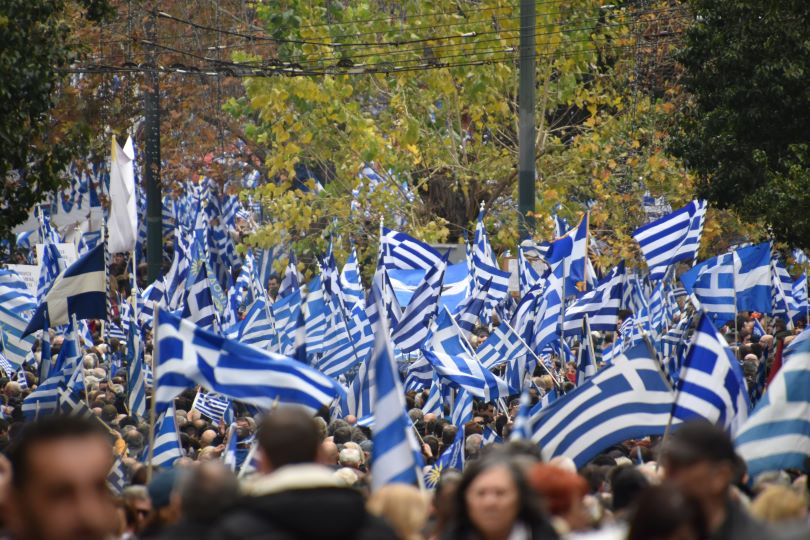
“Nothing mobilized the Greeks of diaspora […] because the Turkish invasion of Cyprus” (Kaloudis 2008, p. 40). Earlier than that, the Greek group within the US was largely uninvolved in US politics, partly as a result of the truth that many teachers and intellectuals had been exiled because of the dictatorship (Prévélakis, 2000, p. 179). Kaloudis additional argues that causes for the Greeks to remain out of American politics included their hope of returning house, their disbelief towards unions and the restrictions positioned by their religious-ethnic id (Kaloudis, 2018, p. 162). Nevertheless, the Turkish invasion proved a big drive that motivated the Greek communities to enter the polity en masse (Karpathakis, 1999; Prévélakis, 2000; Kaloudis, 2008; Kaloudis, 2018). As a response to the invasion, and in hopes that the US authorities would change its place, Greeks from all around the US gathered in DC to protest and place strain on Congress (Kaloudis, 2018, p. 186). Moreover, the group turned to nationwide and native politicians of each events to foyer for the Greek trigger, whereas they tried the Americanization of the group to include the immigrants into the polity and affect overseas coverage (Karpathakis, 1999, p. 57). Concurrently, giant Greek organizations just like the Panhellenic Emergency Committee and the United Hellenic Affiliation enacted vital mobilizations to affect the congress in the direction of Greek-friendly insurance policies (Kaloudis, 2018, p. 188). Lastly, the leaders of the communities started forging relations with politicians, reminding them of their voting energy, and increasing their community by fundraisers (Karpathakis, 1999). The mass mobilization led to the creation of the “Greek Foyer,” which in flip pressed for a Congressional embargo on Turkey (Kaloudis, 2018).
Evaluation
The response, and eventual motion, of the Greek-People through the mid-Seventies is carefully associated to the speculation set forth within the first part. The onset of the Greek diaspora diplomacy can not at all be described as DTD, however fairly DBD. The diaspora had a disconnect with not solely the altering Greek authorities, but in addition the “State Division of Kissinger post-Watergate” (Kaloudis, 2008, p. 42). Ho and McConnell additionally argued that “diasporas act nationalistic and promote extremism and radical agendas” (Ho & McConnell, 2017, p. 246). The Greek-American perspective in the direction of the dictatorship sparked nice divisions amongst them (Kaloudis, 2008, p.40), resulting in an absence of consensus and consequently inaction. However, Greeks united towards the worry of a Turkish invasion in Greece, illustrating the long-standing nationalist factor of Greeks.
Moreover, wanting additional into how diaspora diplomacy developed onwards from 1975, it’s clear that many traits could be assigned to diaspora diplomacy. For instance, Kaloudis (2008) emphasizes how Greek-People developed their very own id that was separate from these left behind. This resulted in conditions the place the one group typically failed to know the opposite because of the totally different trajectories every group had adopted (Kaloudis, 2008, p. 48). This instantly pertains to Brinkerhoff’s emphasis of a twin id. The Greek diaspora has managed to create a separate id that lies in a limbo between the US and Greece and will thus affect each by its connecting factors with every. The binary place is additional examined within the Greek People’ failure to totally assimilate into American society by sidelining the home points, however fairly utilizing Greek points to enter the native politics and keep a “binational id” (Karpathakis 1999, p. 55).
Lastly, the rapid response of the communities nearly follows the definitions of literature. The Greeks massively lobbied for Greek pursuits within the Congress, assisted within the integration of newcomers to advertise their agenda, adopted an unbiased agenda from each the Greek and the US authorities and tried to advocate for the advantages of their COO. Although their early makes an attempt largely didn’t have any diplomatic tact, Greek-People entered US polity for the only real objective of selling the aims described 40 years later as diaspora diplomacy.
Concluding, analysis in diaspora diplomacy, although nonetheless weak, focuses on how diasporas are utilized by the governments of the COO and COR to advertise the advantages of every to the opposite. Diasporas typically act of their very own volition as representatives of their communities of origin in an try to help the COO. This was the case of the Greek diaspora within the US. Analysis on how the Greek diaspora makes use of its twin id to advertise American and Greek pursuits has been very restricted within the area of diaspora diplomacy. Nevertheless, intensive analysis has been performed on the migration model and assimilation of the Greek group within the American polity because of the Turkish invasion of Cyprus. The current paper tried to mix analysis within the two fields with a view to showcase how a historical past of over 40 years could be outlined as diaspora diplomacy. Transferring forwards from this analysis, Greek-American communities and Greeks ought to extra successfully make use of the diaspora diplomacy. That is true not just for the immigrant communities within the US but in addition within the European Union because of the mind drain. Such communities may use lobbying mechanisms each from Athens in the direction of European establishments and vice versa to affect positions and create a stronger coherence between the 2.
Bibliography
Adamson, F. B., & Demetriou, M. (2007). Remapping the Boundaries of `State’ and `Nationwide Identification’: Incorporating Diasporas into IR Theorizing. European Journal of Worldwide Relations, 13(4), 489–526. https://doi.org/10.1177/1354066107083145
Brinkerhoff, J. (2019). Diasporas and Public Diplomacy: Distinctions and future prospects. The Hague Journal of Diplomacy, (14)1-2, pp. 51-64.
Coufoudakis, V, (1977). U.S. overseas coverage and the Cyprus query: An interpretation. Millenium, 5, pp. 245-268
Hellenic American Management Council. (2020). Inform Secretary Pompeo: Stand with Greece. Hellenic American Management Council. https://hellenicleaders.p2a.co/l0ujj2o
Ho, E.L. and McConnell, F. (2017). Conceptualizing “diaspora diplomacy”: territory and populations betwixt the home and overseas. Progress in Human Geography, 43(1), pp. 163-171.
Huijgh, E. (2016). Public diplomacy. In C. Constantinou P. Kerr & P. Sharp (Eds.), The SAGE Handbook of diplomacy (pp. 437-450). 55 Metropolis Highway, London: SAGE Publications Ltd doi: 10.4135/9781473957930.n36
Kaloudis, G. (2008). The affect of the Greek diaspora on Greece and the USA. Worldwide Journal on World Peace, 25(3), p29-59. 31
Kaloudis, G. (2018). Fashionable Greece and the Diaspora Greeks in the USA. Lexington Books. ProQuest Book Central, https://ebookcentral-proquest.com.ezproxy.leidenuniv.nl:2443/lib/leidenuniv/detail.action?docID=5254582
Karpathakis, A. (1999). Residence society politics and immigrant political incorporation: The case of Greek immigrants in New York Metropolis. Worldwide Migration Assessment, 33(1), 55–78. https://doi.org/10.1177/019791839903300103
Miller, J. E. (2009). America and the making of Fashionable Greece: Historical past and energy, 1950-1974. The College of North Carolina Press Chapel Hill.
Prévélakis, G. (2000) The Hellenic diaspora and the Greek state: A spatial strategy, Geopolitics, 5(2), pp. 171-185, DOI: 10.1080/14650040008407685
Rana, Ok. (2009). India’s Diaspora Diplomacy. The Hague Journal of Diplomacy, 4(3), pp.361- 372.
Rana, Ok.S. (2013). Diaspora Diplomacy and Public Diplomacy’, in: R.S. Zaharna, Amelia Arsenault, Ali Fisher (eds), Relational, Networked and Collaborative Approaches to Public Diplomacy, New York: Routledge, pp. 70-85.
Sakkas, J. (2004). The Greek dictatorship, the USA and the Arabs, 1967–1974. Journal of Southern Europe and the Balkans, 6(3), pp. 245-257, DOI: 10.1080/1461319042000296804
Stone, D. & Douglas, E. (2018). Advance diaspora diplomacy in a networked world. Worldwide Journal of Cultural Coverage, 24(6),710-
723, DOI: 10.1080/10286632.2018.1495712. Retrieved from https://www.tandfonline.com/doi/full/10.1080/10286632.2018.1495712